call_end

    • chevron_right

      Sophie Herold: This was 2024

      news.movim.eu / PlanetGnome • 31 December, 2024 • 1 minute

    In non-chronological order

      • Earned money for the first time within many many years.
      • Wrote C bindings and GObject introspection annotations for a Rust library for the first time.
      • Wrote 40 weekly updates on Patreon / Ko-Fi .
      • Got formally diagnosed with Autism.
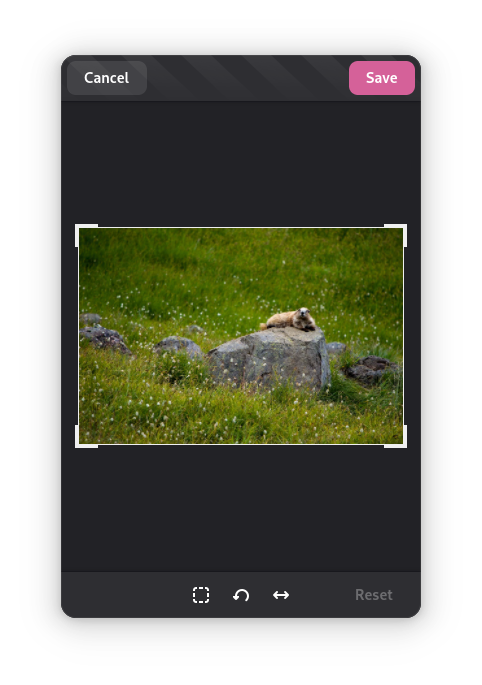
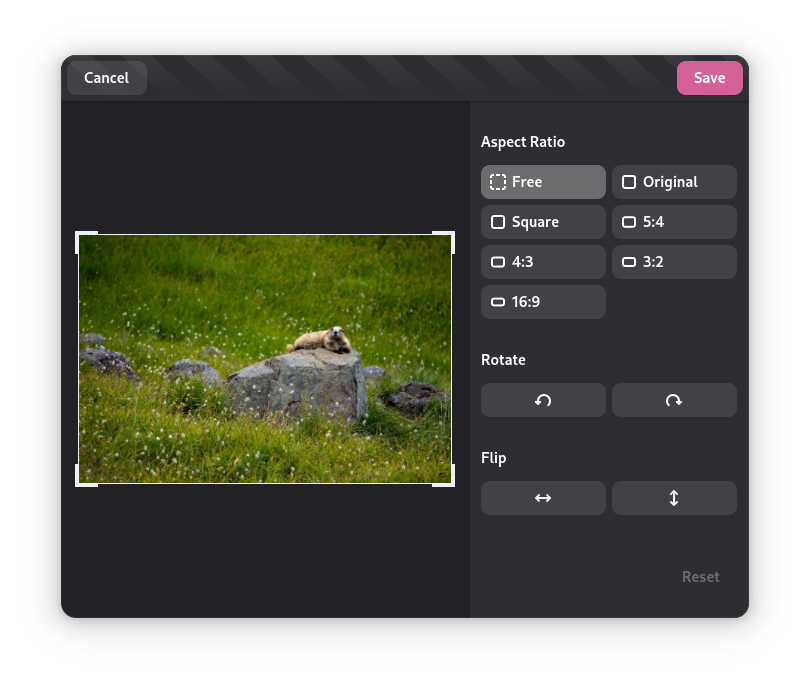
      • Implemented some basic image editing in Loupe.
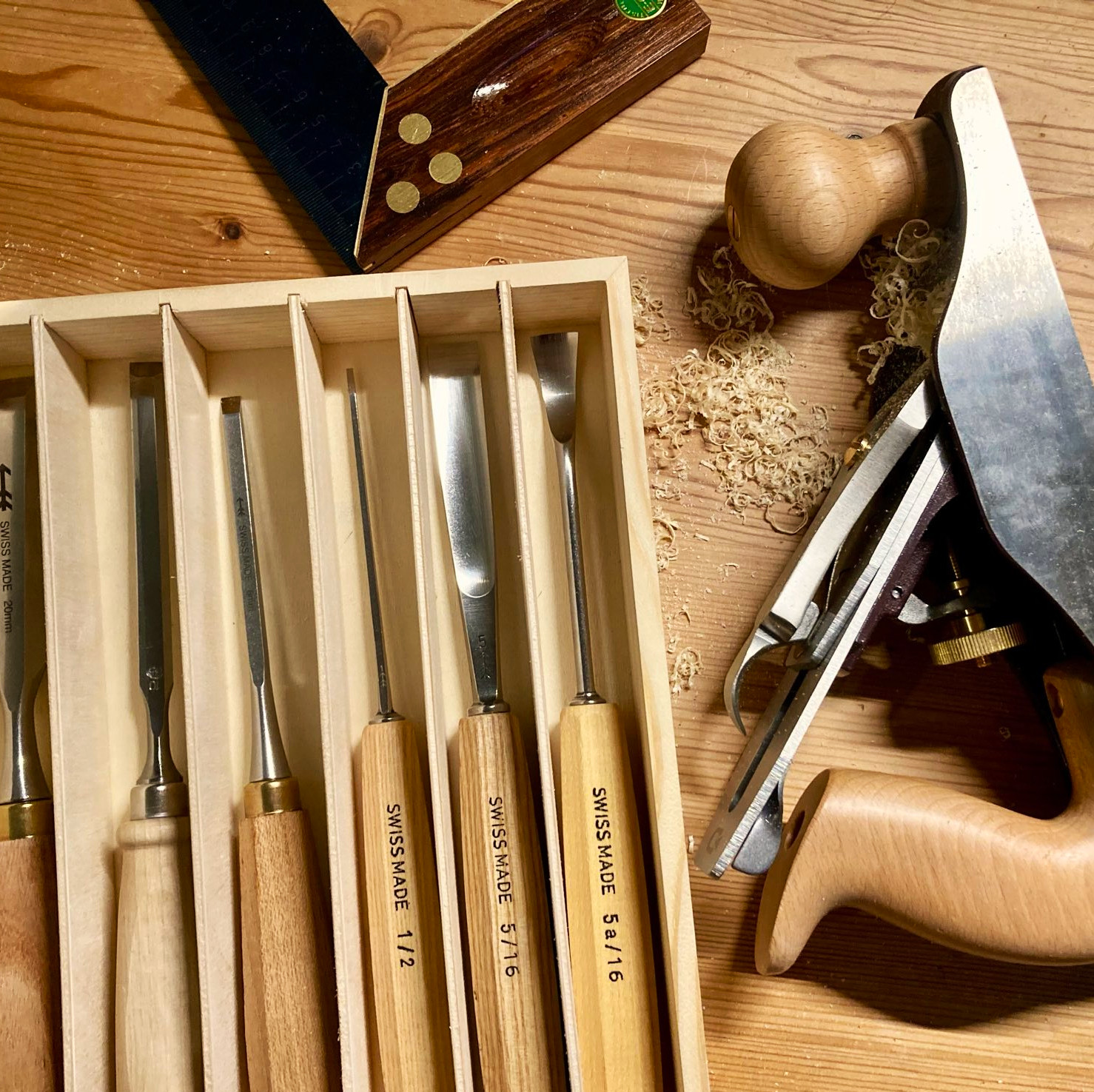
      • Bought new woodworking tools.
      • Got bold and worked on a few lines of security critical C-code.
      • Confirmed with my doctors that the suspected diagnosis changed from fibromyalgia to ME/CFS .
      • Dove into BuildStream to add for more complete Rust support.
      • Released a collection of Rust crates that allow extraction, recomposition, and editing of image data including Exif or XMP for several image formats.
      • Created a website that lists all GNOME components like libraries that are not apps.
      • Called a Taxi for the first time in my life.
      • Wrote Rust bindings for the C bindings of a Rust crate.
      • Stopped occupational therapy and started another psychotherapy.
      • Got interviewed by c’t Open Source Spotlight (German).
      • Started ordering groceries online to have more energy for other things.
      • Was proud (and still am) to be part of a community with such a strong pride month statement .
      • Did a bunch of reviews for potential new GNOME Core apps.
      • Expanded the crowdfunding of my work to Patreon , Ko-Fi , GitHub , and PayPal .
      • Built a coat rack.

    A huge thanks to everyone who supported my work!

    Chisels in a box, carpenter’s square, and a hand plane lying on a table

    • chevron_right

      Michael Meeks: 2024-12-27 Friday

      news.movim.eu / PlanetGnome • 27 December, 2024

    • Slept a chunk of the day, caught up with various surreal events amplified by fever dreams. Watched Little Women in the evening.
    • chevron_right

      This Week in GNOME: #180 Image Editing

      news.movim.eu / PlanetGnome • 27 December, 2024 • 2 minutes

    Update on what happened across the GNOME project in the week from December 20 to December 27.

    GNOME Core Apps and Libraries

    Image Viewer (Loupe)

    Browse through images and inspect their metadata.

    Sophie 🏳️‍🌈 🏳️‍⚧️ (she/her) announces

    Image editing including crop, rotate, and flip has been merged into Loupe. Currently, only PNG images are supported. Support for JPEGs is in the works . There is a list of open issues for the current implementation. You can support my work financially on several platforms .

    Third Party Projects

    Sebastian Wiesner says

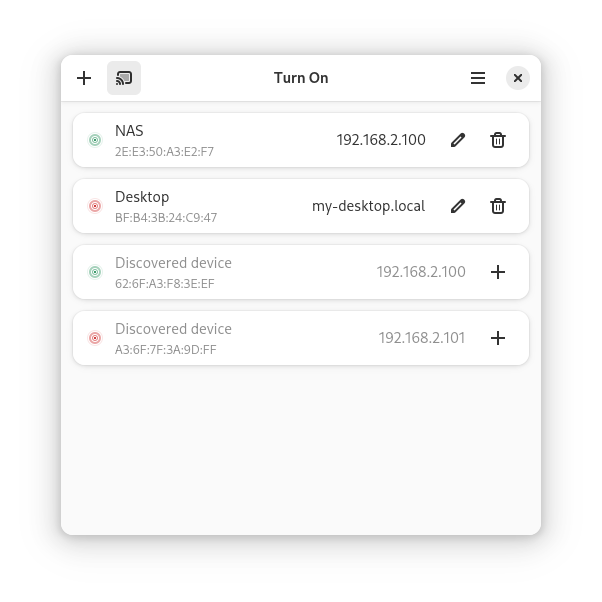
    A new release of TurnOn is available. The new release adds network scanning: When scanning is on TurnOn now finds devices in the local network and offers to save them so that it can later turn them on.

    TurnOn is a small GNOME utility to turn on remote systems such as NAS devices with Wake On LAN. It’s available from Flathub .

    Vladimir Kosolapov says

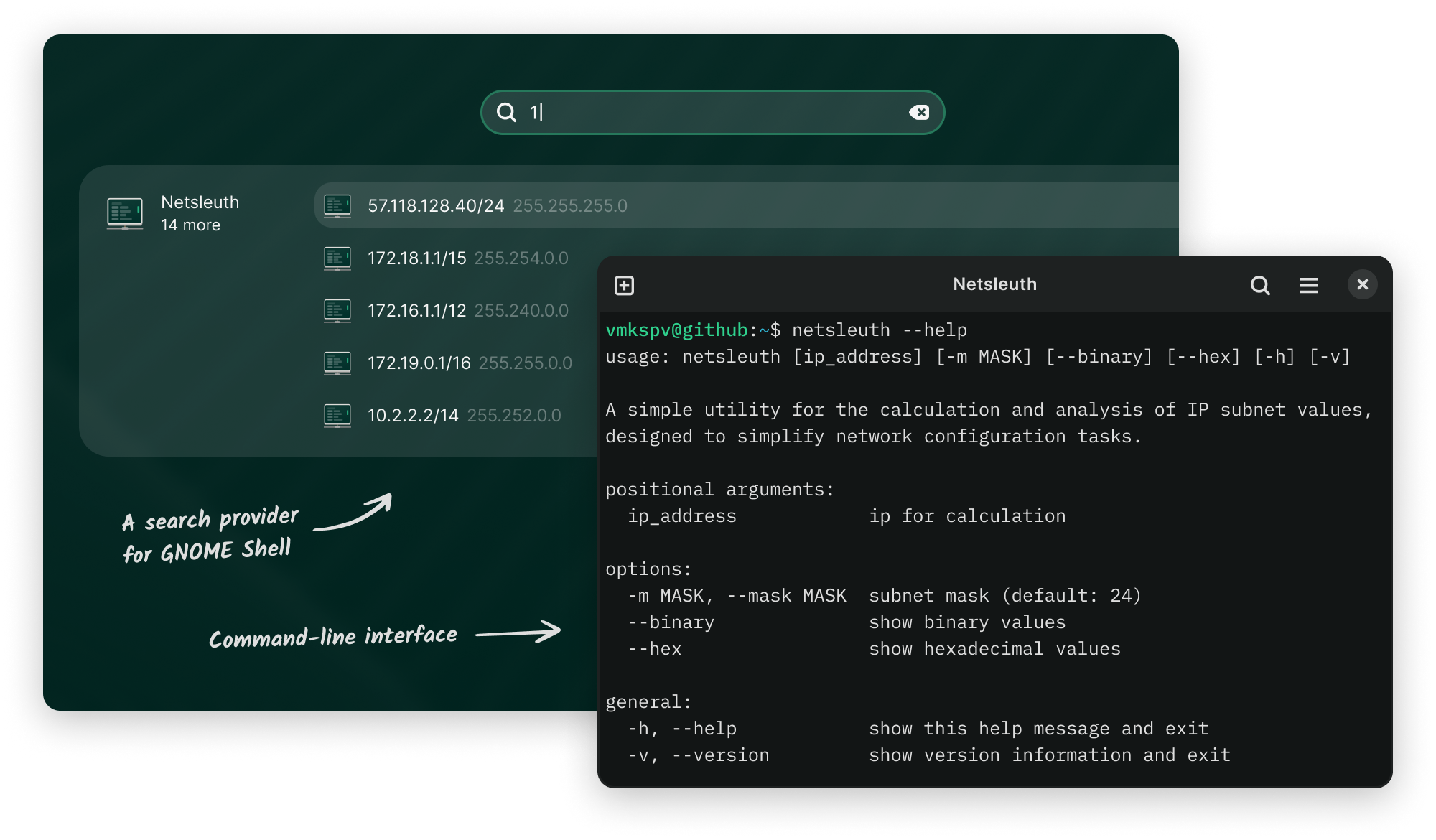
    Netsleuth 1.1.0 is here! This update introduces a search provider for GNOME Shell, command-line interface and new calculable values.

    The calculation history now stores up to 20 entries, allowing for quick retrieval of specific IP addresses directly from the GNOME Shell search.

    For those who prefer a console experience, the command-line interface enables performing the same calculations as in the graphical version.

    This update also introduces two new calculable values — “IPv4 Mapped Address” and “6to4 Prefix”.

    Check it out on Flathub !

    Fractal

    Matrix messaging app for GNOME written in Rust.

    Kévin Commaille reports

    🎶 Vive le vent ! Vive le vent ! Vive le vent d’hiver ! 🌲 And vive Fractal 10.beta! While everyone is resting for the holidays, we thought you could use a new release. It focuses on improvements and bug fixes, including:

    • Videos were often not playing after loading in the room history, this was fixed, and we also show properly when an error occurred.
    • Computing the size of media messages was slightly wrong, which meant that sometimes a grey line would appear below them. We rebooted the code and that problem is gone!
    • Our CSS file was a bit too big for our taste, so we decided to make use of SASS and split it.
    • We were downloading too many different sizes for avatar images, which would fill the media cache needlessly. We now only download a couple of sizes. This has the extra benefit of fixing blurry or missing thumbnails in notifications.

    As usual, this release includes other improvements, fixes and new translations thanks to all our contributors, and our upstream projects.

    It is available to install via Flathub Beta, see the instructions in our README .

    As the version implies, there might be a slight risk of regressions, but it should be mostly stable. If all goes well the next step is the release candidate!

    If you have a little bit of time on your hands, you can try to fix one of our newcomers issues . Anyone can make Fractal better!

    GNOME Websites

    Felix announces

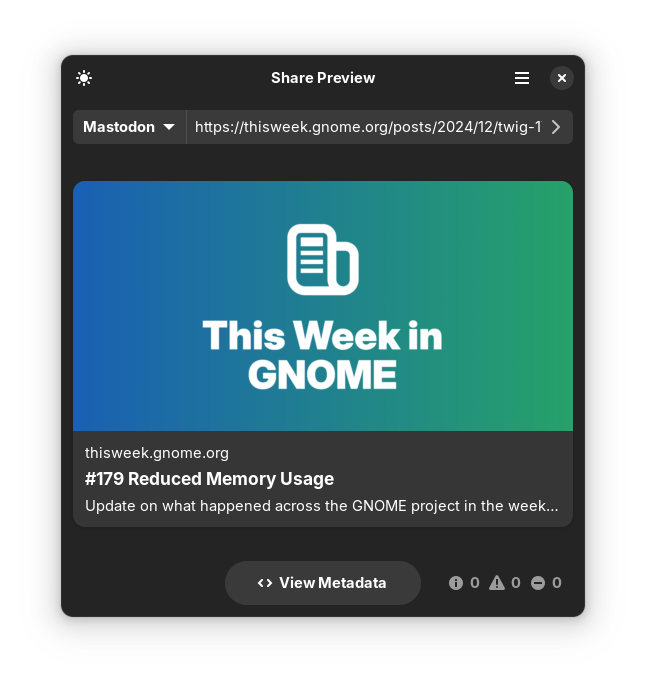
    Thanks to Brage Fuglseth (he/him), thisweek.gnome.org now supports the OpenGraph protocol , which means you can now get rich social media preview cards on sites that support it (e.g. Mastodon, Discourse, Reddit).

    That’s all for this week!

    See you next week, and be sure to stop by #thisweek:gnome.org with updates on your own projects!

    • chevron_right

      Aryan Kaushik: UbuCon Asia 2024

      news.movim.eu / PlanetGnome • 24 December, 2024 • 4 minutes

    Hi everyone!

    It’s been about two weeks since UbuCon Asia (Ubuntu Conference Asia) concluded (fun fact: 13 weeks since I wrote the initial draft, so 15 now), and I’m really starting to miss it.
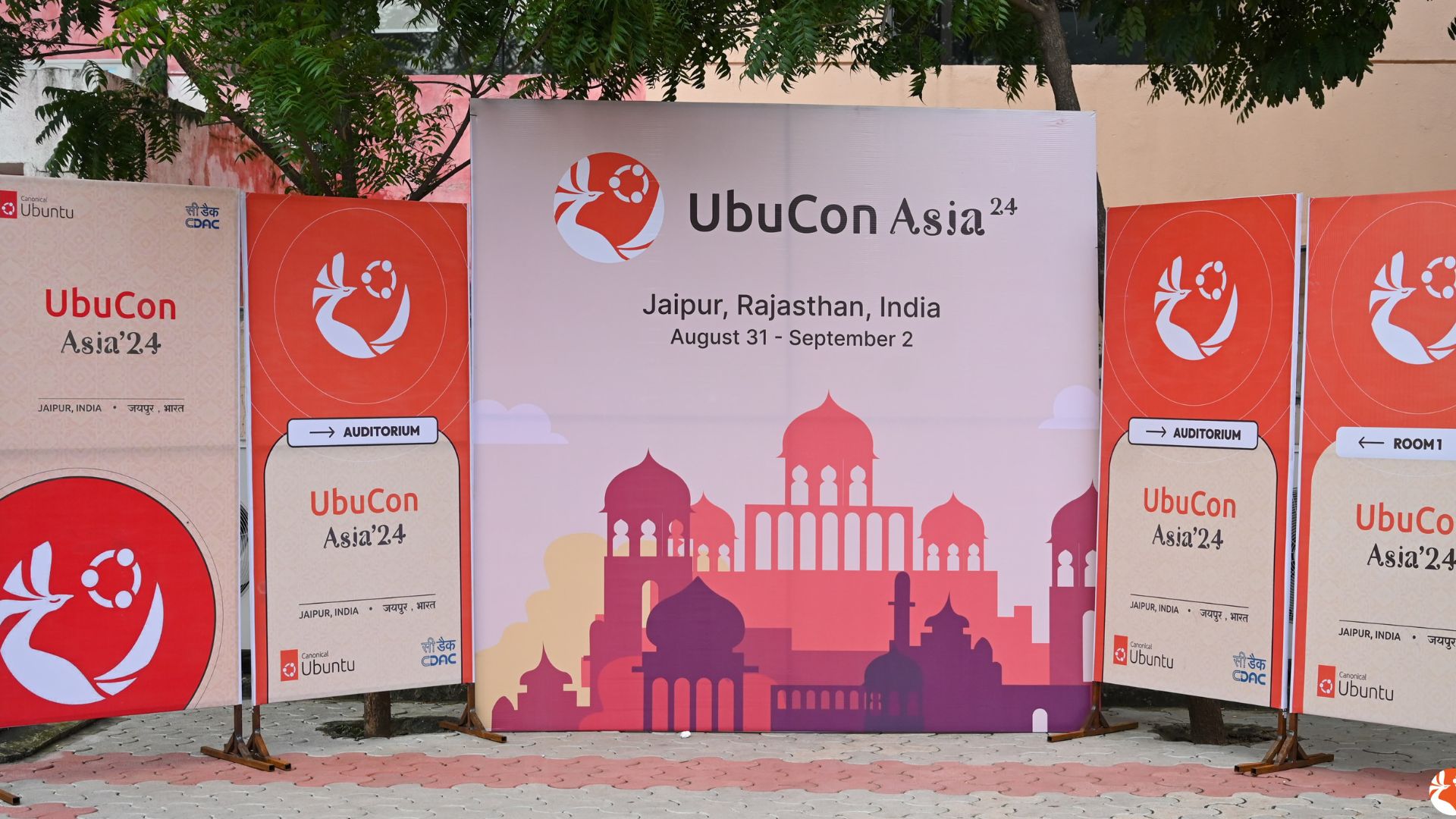
    This blog is being posted after my GNOME Asia post as it was really hard to pack all the emotions and memories in just one blog, but here we go.

    It all started as a wild idea to host GNOME Asia a year or two back. Gradually, it transformed into a joint event between UbuCon and GNOME Asia and eventually into UbuCon Asia 2024.

    Why Jaipur?

    This was one of the most frequently asked questions throughout the conference.

    Interestingly, the local team (us) wasn’t based in Jaipur. We were spread across India, with me in the Delhi area, some members in Maharashtra, and one in Karnataka. Managing Jaipur’s affairs, as you can imagine, wasn’t exactly a breeze.

    So why did we choose it? When the initial idea came up, a friend and I ruled out cities that were overcrowded, too hot (we weren’t entirely right there, but rain saved us lol), or lacking in the cultural heritage we wanted to showcase. We also wanted to pick a city with a budding tech scene, rather than an established one.

    After much deliberation, we ruled out Bengaluru, Delhi, Mumbai, and Hyderabad. Jaipur, being relatively closer to me and ticking all the right boxes, became the chosen one!
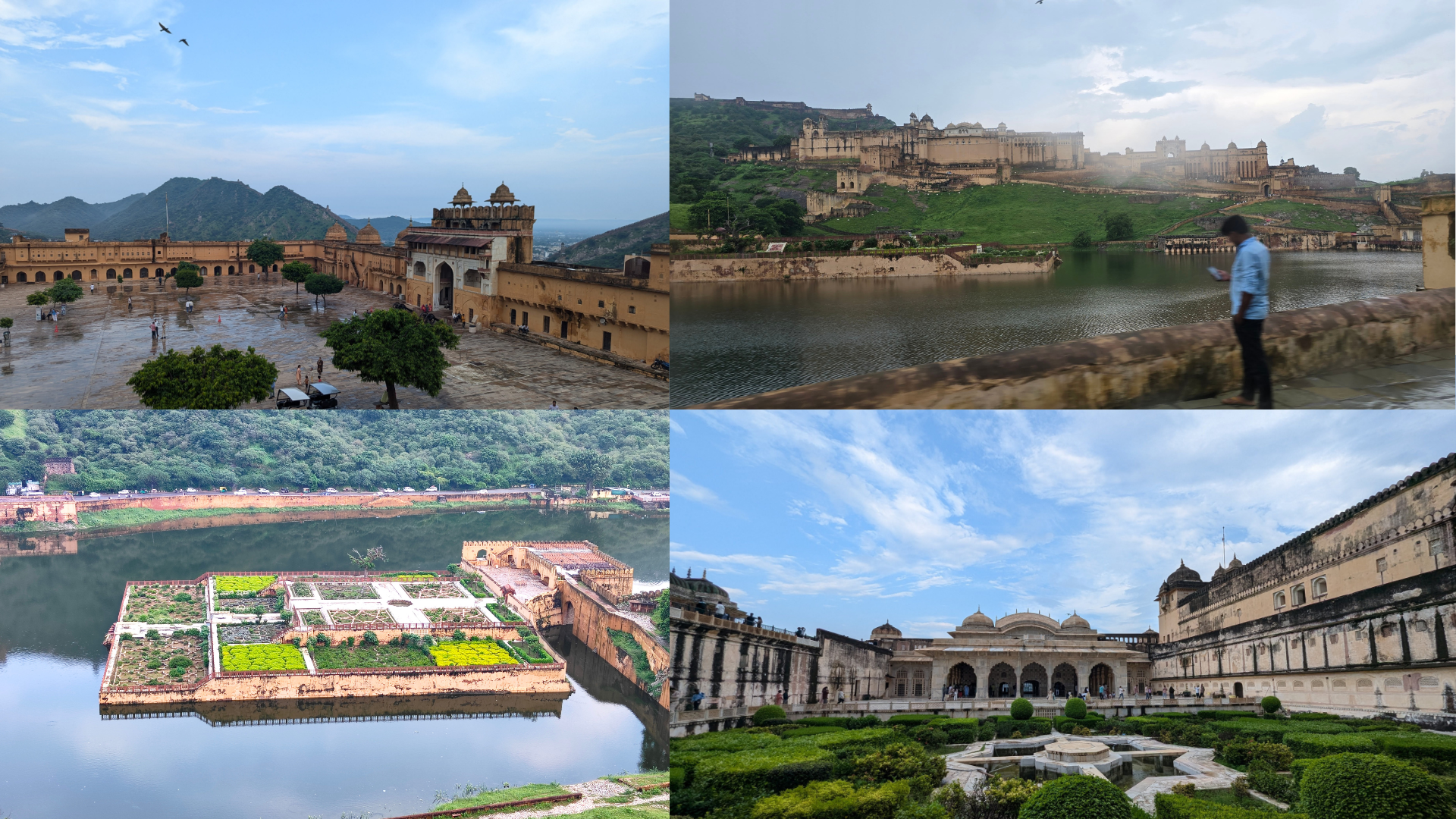
    In the end, we found the best college we could have in Jaipur, with a phenomenal volunteer team.

    Why did we organize it?

    Initially, the plan was to host GNOME Asia because GNOME is a community I deeply love. Having attended many GNOME events, I always wondered, "What if we host one in India?" With the largest population, immense Git activity, and a mature tech audience, India seemed perfect. But the sheer effort required always held me back - I’m just a developer who loves to code more than to manage people :)

    The UbuCon planning began after GUADEC 2023, where I met Mauro at the Canonical booth. This led to rebooting Ubuntu India, with hosting UbuCon Asia as our first official activity.

    I hesitated when asked to host UbuCon Asia but couldn’t resist the challenge. Bhavani (my co-lead) also proposed hosting in Bangalore, so we combined our bid with my proposal for Jaipur. To our delight, we won! Although discussions for a joint venture with the GNOME team didn’t pan out, we forged ahead with UbuCon Asia.
    The Challenges We Faced

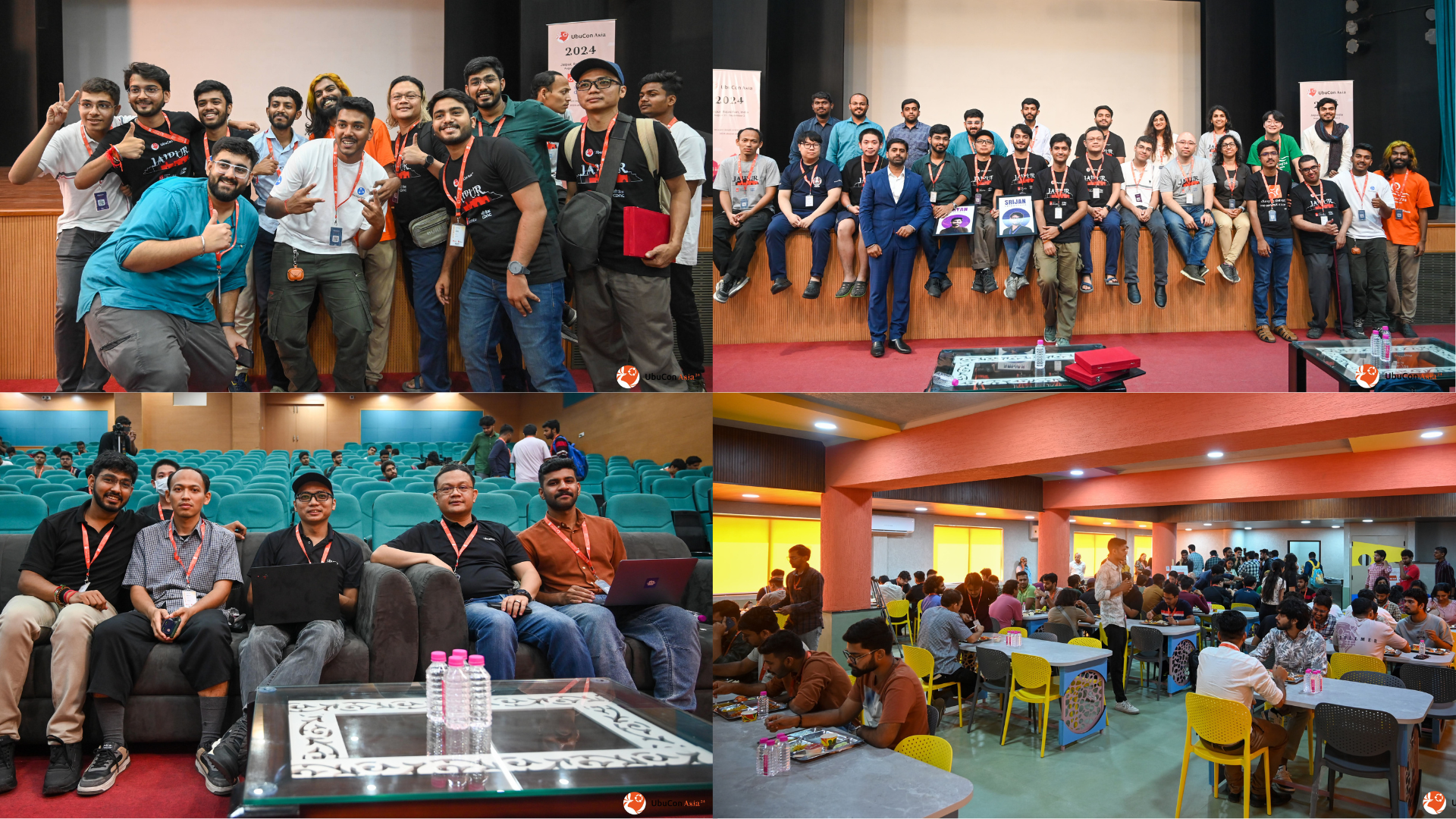
    Although my role was initially to oversee and allocate tasks, I found myself involved in everything, which was hectic. Thankfully, the whole team worked as one on event days and without them, I wouldn’t have been able to handle the last two days of the event.

    Managing Jaipur’s affairs remotely was tough, but the college we partnered with was incredibly supportive. Their students volunteered tirelessly.
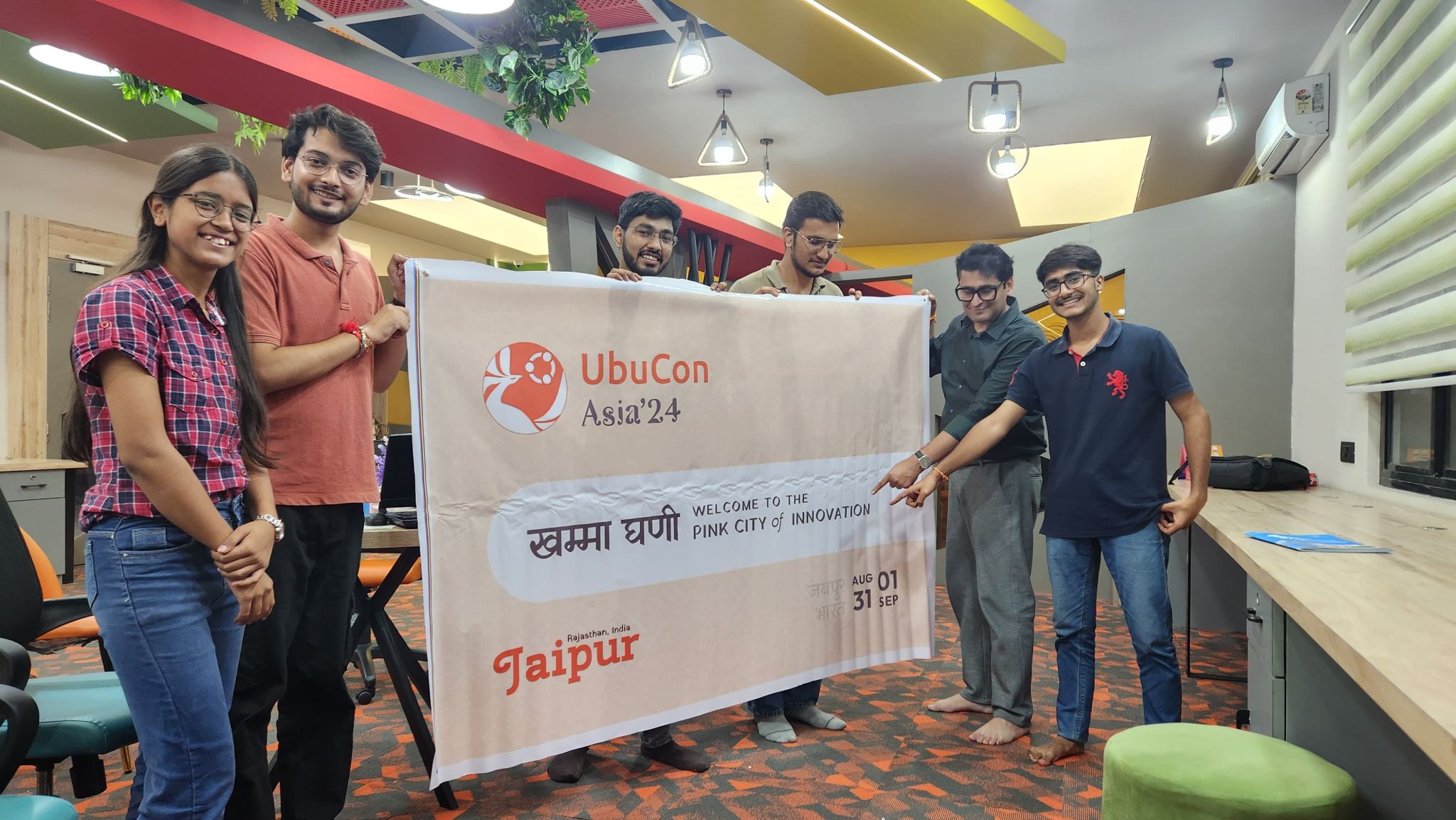
    Unexpectedly, our stage hosts backed out of the event just a day before due to placement drive in college, causing a session delay on the first day. Visa letter delays (Caused due to the Bangladesh crisis) and funding challenges due to Indian remittance laws were additional hurdles.

    How It All Ended

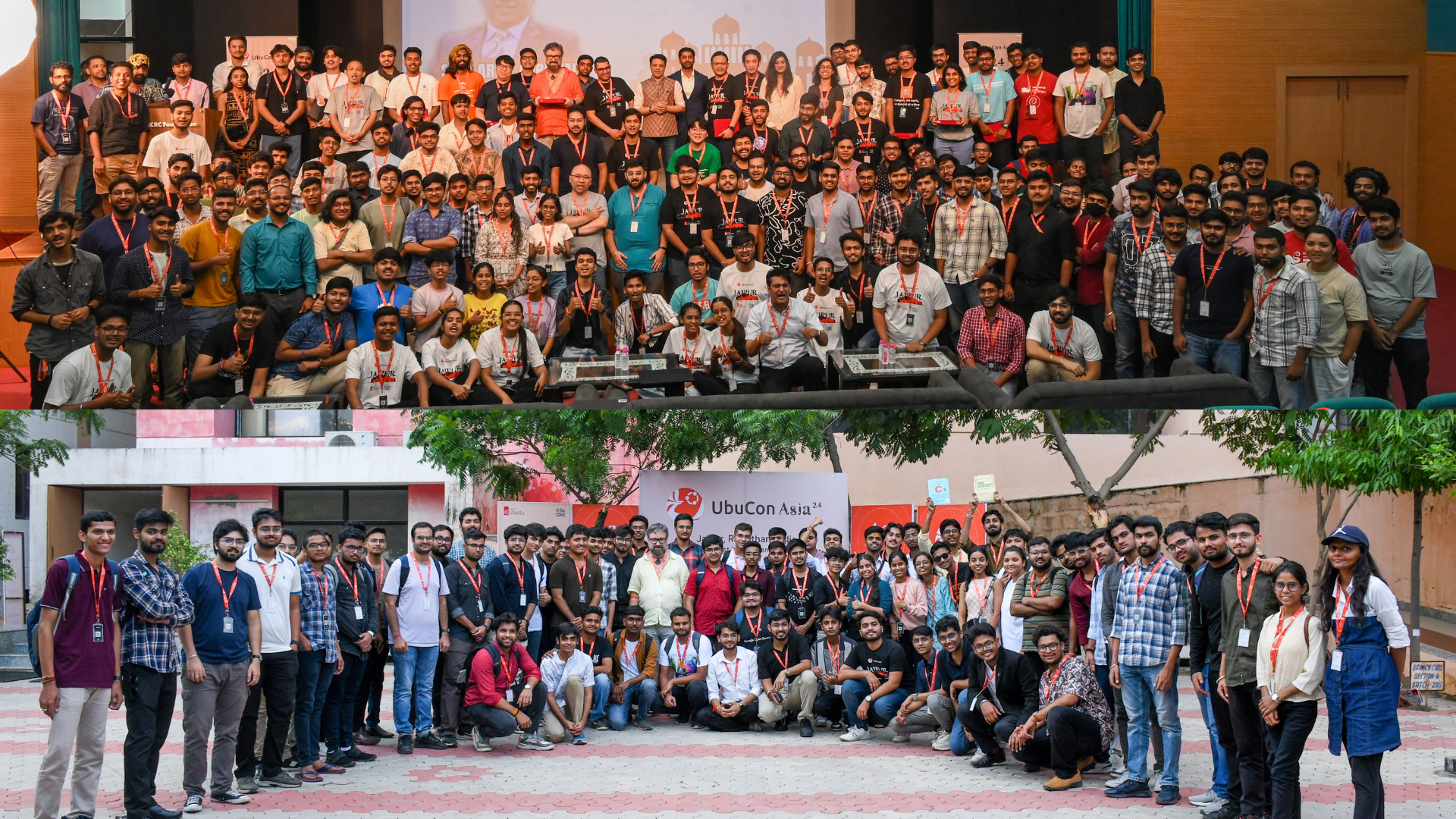
    Despite everything, we pulled it off, and dare I say, even better than many seasoned organizers might have! Seeing the community gather in India for UbuCon Asia was amazing.
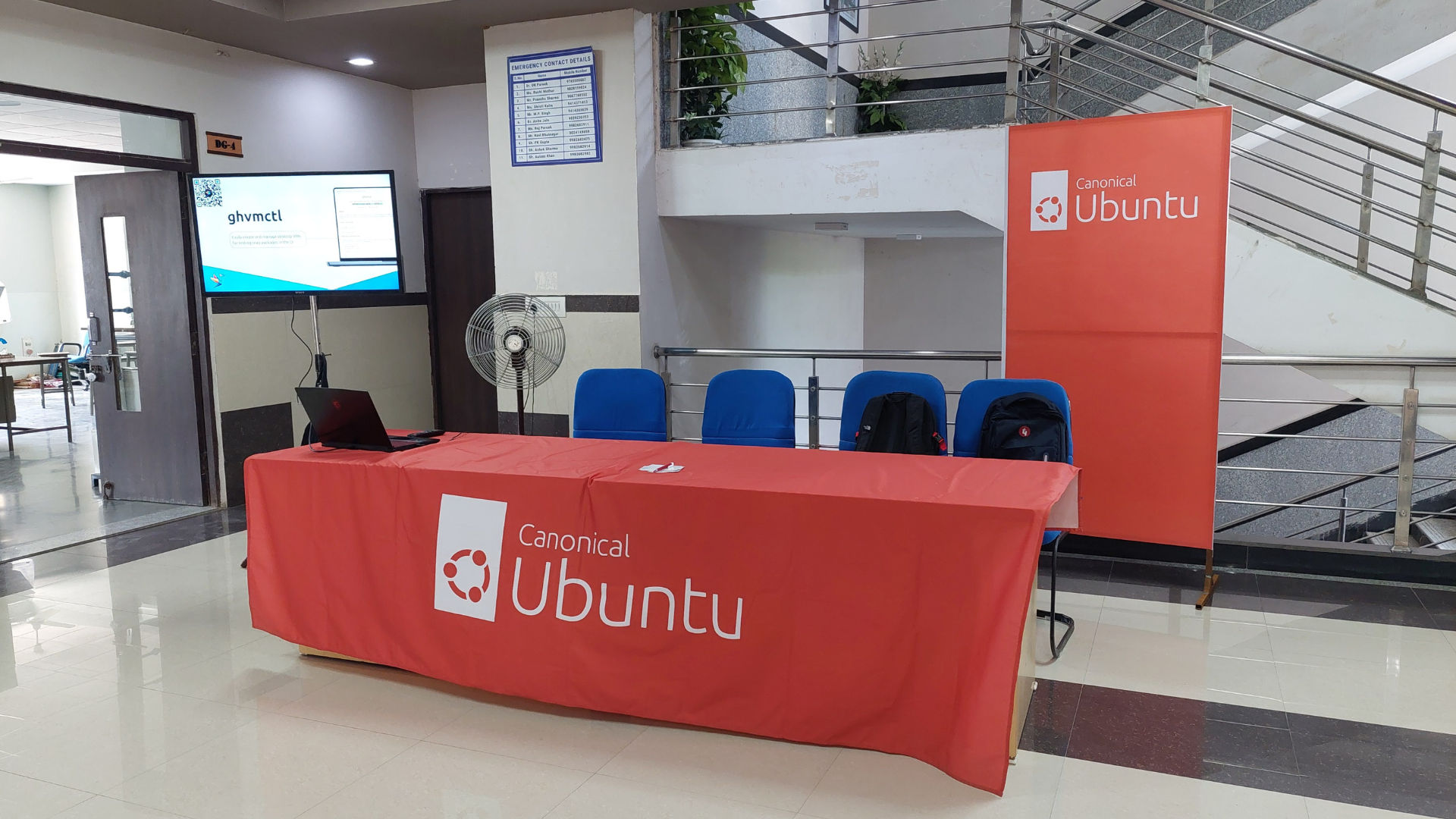
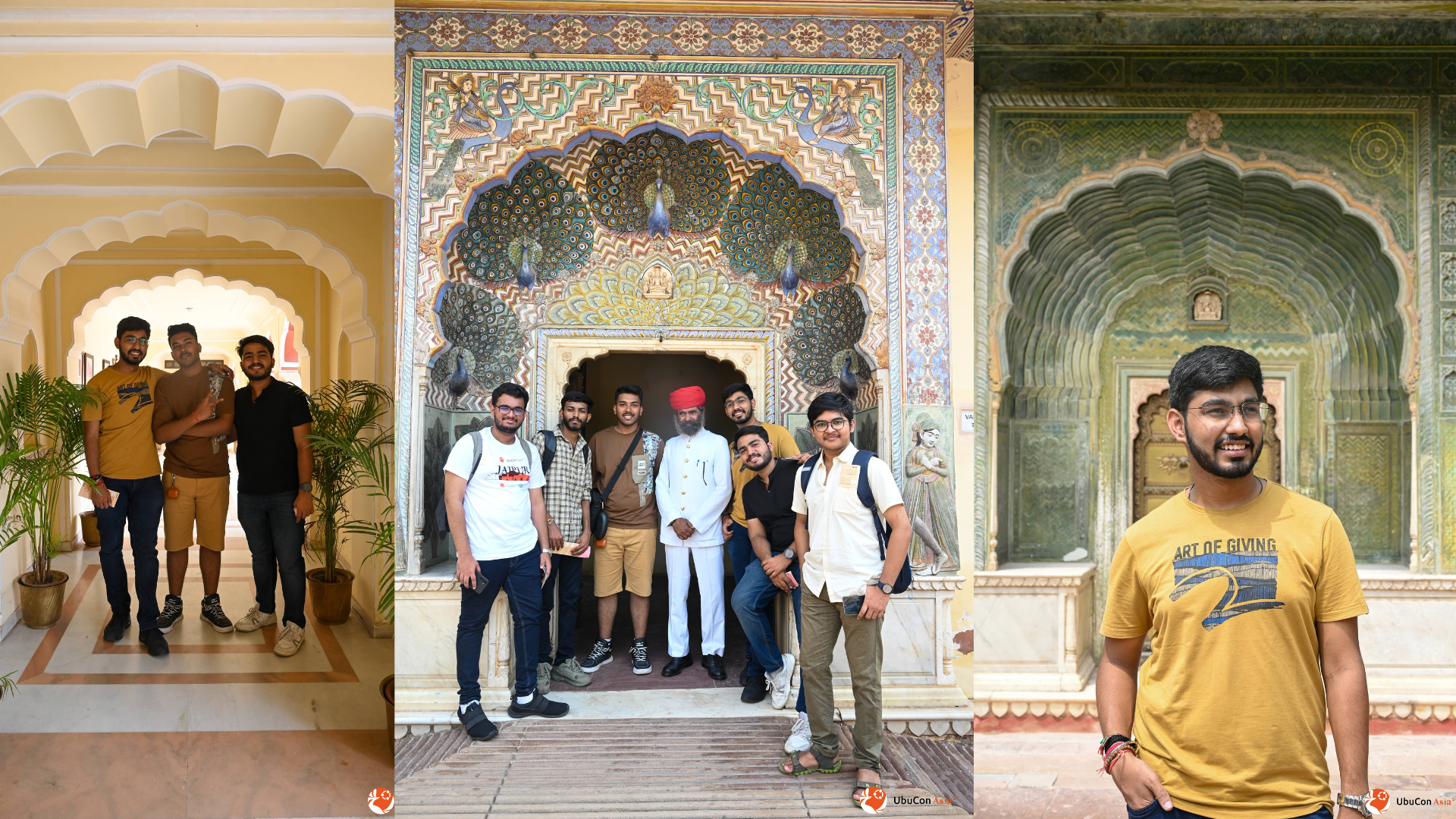
    We had Ubuntu and CDAC booths, delicious food (thanks to FOSS United and OnlyOffice), and lots of goodies for attendees. A proper Indian lunch with dessert, coffee breaks with Rajasthani and Indian snacks, a conference dinner, and subsidized day trips - all funded, were a relief.
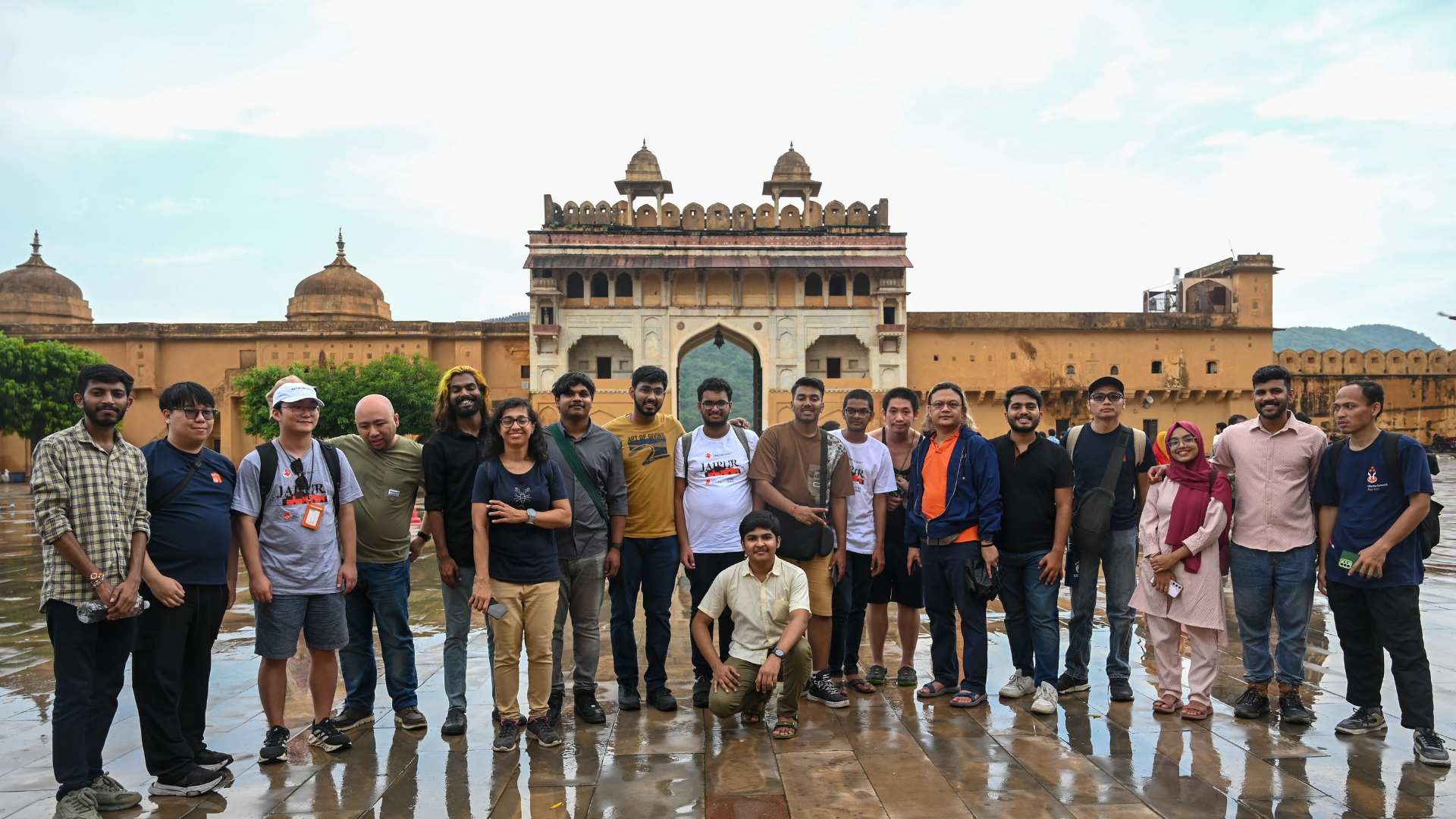
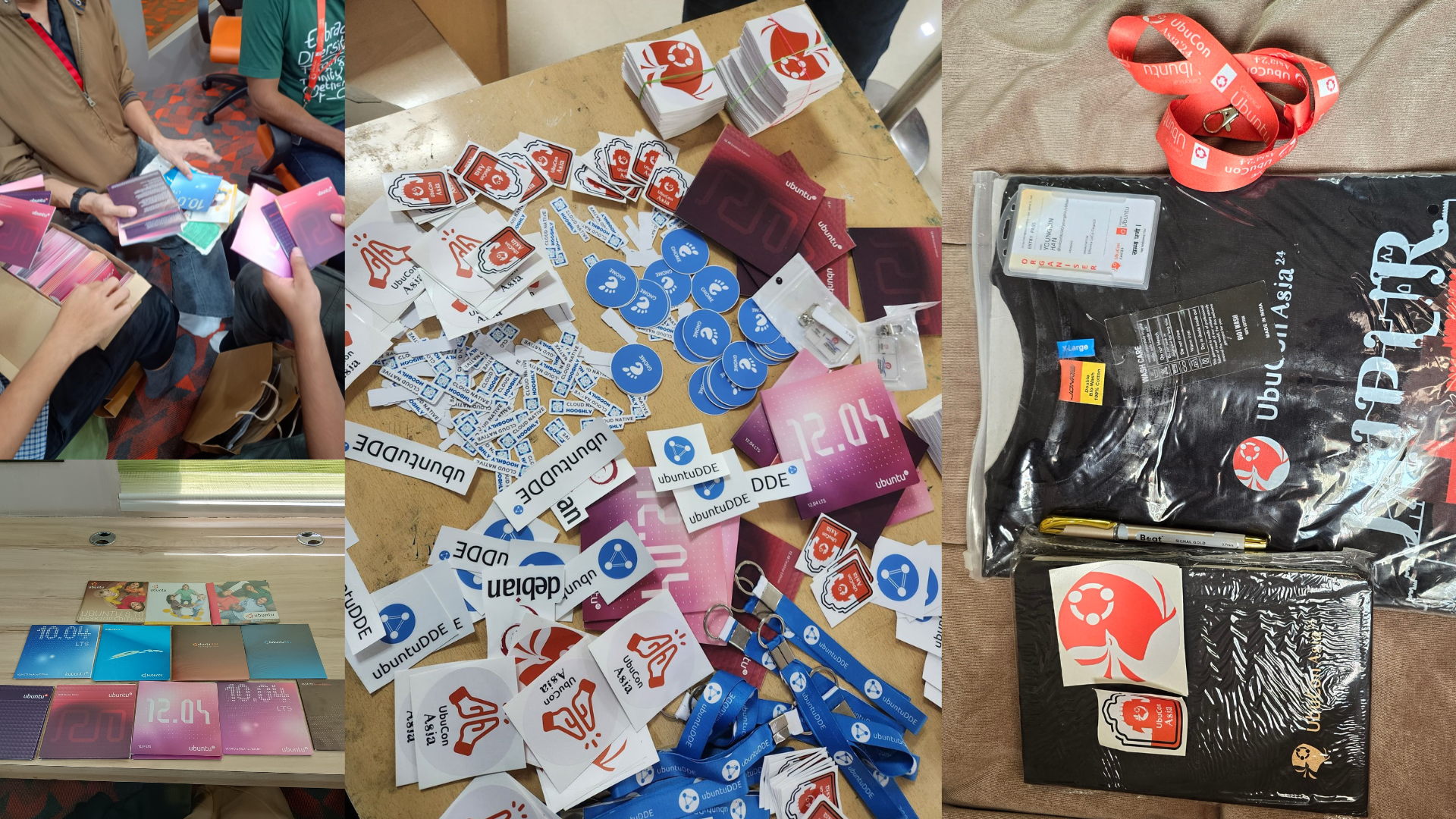
    Considering just weeks ago we were struggling to break even and were partially at a loss, to end with a surplus instead was truly relieving.

    Fun fact: Leftover funds helped us host the release party at GNOME Asia 2024 and will support UbuCon India 2025 and UbuCon Asia 2025.
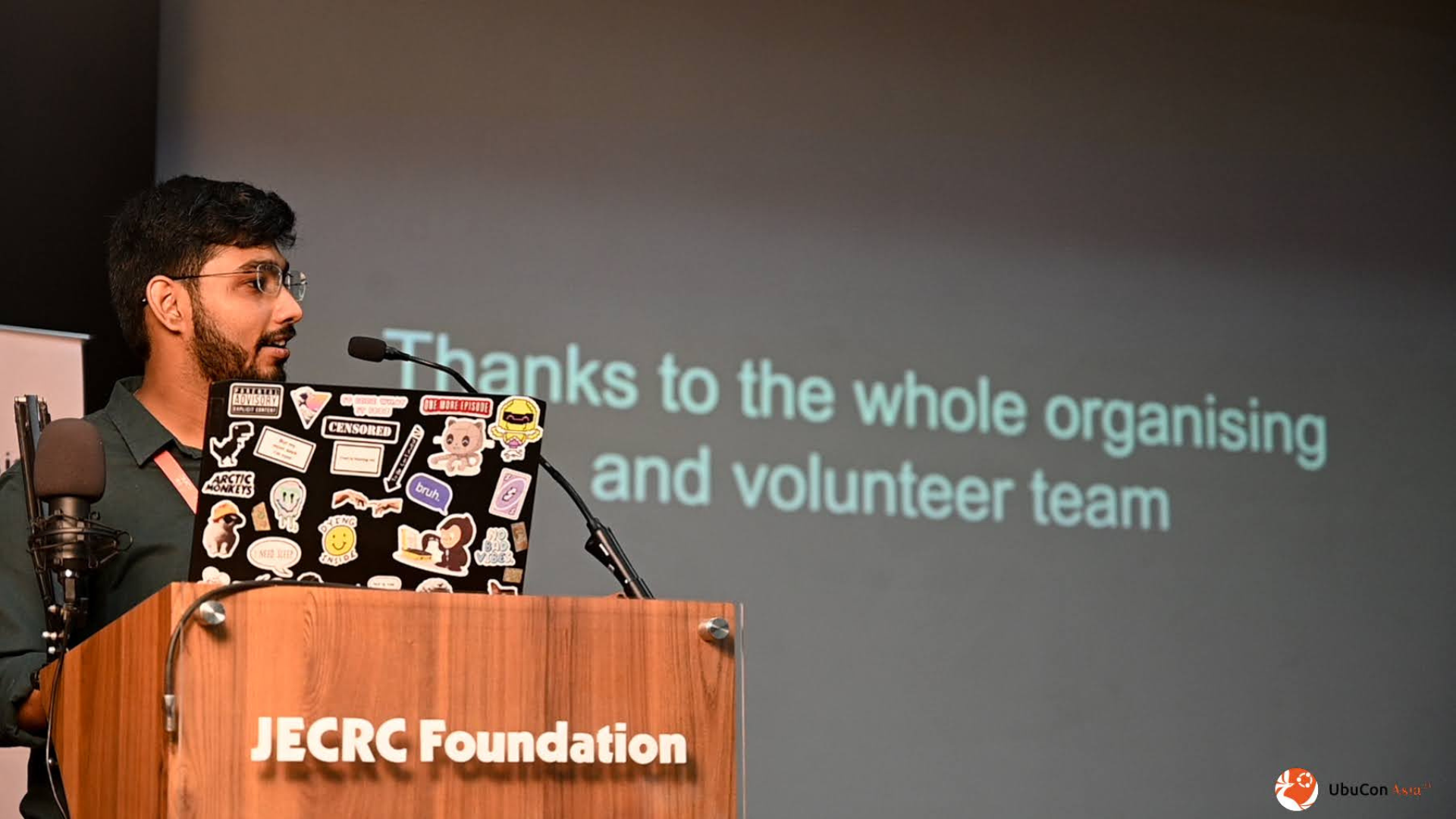
    In my opening note, I joked, “I’m excited for the conference to end,” but now I realize how wrong I was.

    I enjoyed every moment of it. I wasn’t able to attend more than one talk because when you are the lead, you just can’t sit, you have to work the hardest and keep everything together, but that work also gave me lots of enjoyment and satisfaction.

    My favorite feedback? “We knew it was your first time organizing at this scale because we saw how tense and hardworking you were, ensuring everything ran smoothly, which it did.”
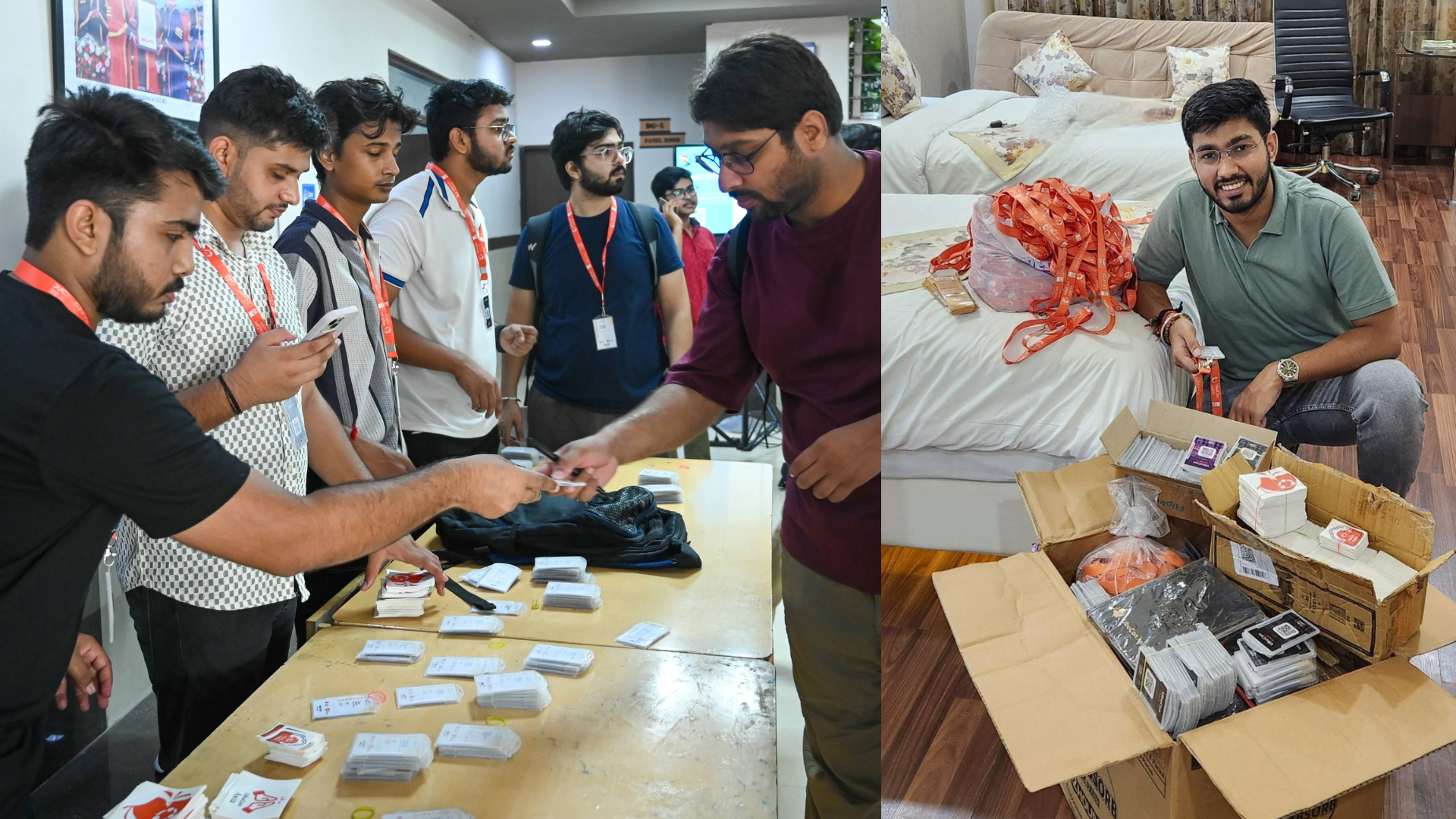
    I regret not being able to meet many people I wanted to in more depth. Like Debian India folks, Aaditya Soni from AWS Rajasthan, Vishal Arya from FOSS United, Rudra the reviver of Ubuntu Unity and more.

    We truly had astonishing people attend and I just wish to re-witness it all from an attendee's perspective now :P

    The aftermovie can be viewed at - https://youtu.be/Ul8DQh3yroo?si=U2F3wi6mKBIVPJ6g :D
    Future Plans?

    Well... UCA’24 was draining and I don’t want to think of another event for a while haha (This didn't last long considering the release party we hosted xD).

    We are currently working on creating smaller regional Ubuntu communities in India, and hopefully organise UbuCon India.

    So if you are a sponsor, please reach out, we can really use your help in the initiative :)

    Also, if you want to be a part of the Ubuntu India LoCo community, let me know and we can have a conversation about it ;)

    A special thanks to Canonical, CDAC, FOSS United, Only Office and Ubuntu Korea for their sponsorship :)

    • chevron_right

      Jussi Pakkanen: CapyPDF 0.14 is out

      news.movim.eu / PlanetGnome • 23 December, 2024 • 2 minutes

    I have just released version 0.14 of CapyPDF . This release has a ton of new functionality. So much, in fact, that I don't even remember them all. The reason for this is that it is actually starting to see real world usage, specifically as the new color managed PDF exporter for Inkscape . It has required a lot of refactoring work in the color code of Inkscape proper. This work has been done mostly by Doctormo, who has several videos on the issue.

    The development cycle has consisted mostly of him reporting missing features like "specifying page labels is not supported", "patterns can be used for fill, but not for stroke" and "loading CMYK TIFF images with embedded color profiles does not work" and me then implementing said features or finding out how how setjmp/longjmp actually works and debugging corrupted stack traces when it doesn't.

    Major change coming in the next version

    The API for CapyPDF is not stable, but in the next release it will be extra unstable. The reason is C strings. Null terminated UTF-8 strings are a natural text format for PDF, as strings in PDF must not contain the zero glyph. Thus there are many functions like this in the public C API:

    void do_something(const char *text);

    This works and is simple, but there is a common use case it can't handle. All strings must be zero terminated so you can't point to a middle of an existing buffer, because it is not guaranteed to be zero terminated. Thus you always have to make a copy of the text you want to pass. In other words this means that you can't use C++'s string_view (or any equivalent string) as a source of text data. The public API should support this use case.

    Is this premature optimization? Maybe. But is is also a usability issue as string views seem to be fairly common nowadays. There does not seem to be a perfect solution, but the best one I managed to crib seems to be to do this:

    void do_something(const char *text, int32_t len_or_negative);

    If the last argument is positive, use it as the length of the buffer. If i is negative then treat the char data as a zero terminated plain string. This requires changing all functions that take strings and makes the API more unpleasant to use.

    If someone has an idea for a better API, do post a comment here.

    • chevron_right

      Adetoye Anointing: Everybody Struggles: Struggles, Lessons And Growth

      news.movim.eu / PlanetGnome • 23 December, 2024 • 2 minutes

    tanjiro struggling to pushing the boulder

    Prerequisite

    I have been an Outreachy GNOME intern for a while now. GNOME is a free and open-source desktop environment for Linux and similar systems. It consists of quite a number of projects that make up the entire overall system, and the one I am working on for my internship is Librsvg .

    About Librsvg : It is a small library to render Scalable Vector Graphics (SVGs) associated with GNOME projects.

    Struggles

    Initially, my struggle was with the programming language because Rust wasn’t my primary language before I started the internship. This led to the struggle of understanding the codebase. But let’s be honest, it’s written in Rust, and it takes quite some time to fully onboard. Luckily, my internship is centered around implementations to handle the SVG2 text layout algorithm. Plus, a programming language is just a tool to get the job done and should not be a hindrance if you are willing to learn and put in the work.

    During the course of the internship, I have also struggled with some domain-specific terminologies like Bi-di, glyphs, and how the existing program handles SVGs such as nested Bi-di and rendering. The struggle of understanding domain terminologies and how the program executes is natural. The steps to overcoming those struggles are crucial for growth and development.

    What stood out towards helping me understand these struggles is the guidance of my mentor, Federico. We set up regular meetings, and whatever is discussed is noted in our shared pad for future reference and documentation. He also made it easy for me to ask questions by making it clear that “no question is too dumb to ask,” and he never takes offense when I re-ask a question he has already answered and I forgot.

    In our last meeting, he said something that stuck with me. When I told him a particular task felt overwhelming, he said, “I understand you; it is expected to be overwhelming to anyone,” with a big smile. His understanding and patience have been instrumental in my progress and Federico’s encouragement to ask any question, no matter how small, has been invaluable in building my confidence.

    Tackling Tasks

    I have completed a few tasks, and the way I approach them is by tackling them head-on. I do research where required and push for review. Never underestimate the power of reviews toward the completion of a project.

    Overall, keep an open mind, be ready to learn, and always ask questions. If you have bad memory like mine, write things down as they come.

    Final Thoughts

    Keep in mind that struggles are part of the journey. You cannot run or shy away from what needs to be done, so why not just do it in time and have the rest of the time to understand your mistakes, reiterate on them, overcome them, and tag it as a win for yourself and a story to share with others.

    Looking forward to sharing more of my internship progress with you soon!

    See you in the next chapter—cheers!

    • chevron_right

      Christian Hergert: December Projects

      news.movim.eu / PlanetGnome • 20 December, 2024 • 1 minute

    Not all of my projects this December are code related. In fact a lot of them have been house maintenance things, joy of home ownership and all.

    This week was spent building my new office and music space. I wanted a way to have my amplifiers and guitars more accessible while also creating a sort of “dark academia” sort of feeling for working.

    The first step was to get the guitars mounted on the walls. I was looking for something blending artistic showpiece and functional use.

    1500667b7f3fe522.jpeg

    After that I quickly framed them in. Just quarter round with the hard edge inwards, 45° miter, some caulking, easy peasy.

    f4136ae560a779be.jpeg

    My last office had Hale Navy as the color, but the sheen was too much that it made it difficult to actually see the color. This time I went flat and color drenched the space (so ceilings, trim, etc all in matching tone).

    fa5f908956a95a54.jpeg

    Then somewhat final result is here. I still want to have a lighting story for these that doesn’t involve a battery so some electrical fish taping is likely in my future.

    aa35cd0347757e31.jpeg

    I also converted the wide closet into a workstation area with the studio monitors for recording. But that is still partially finished as I need to plane all the slats for the slat wall, frame the builtin, and attach the countertop.

    • chevron_right

      Adrien Plazas: A systemd-sysupdate Plugin for GNOME Software

      news.movim.eu / PlanetGnome • 20 December, 2024 • 1 minute

    In late June 2024 I got asked to take over the work started by Jerry Wu creating a systemd-sysupdate plugin for Software . The goal was to allow Software to update sysupdate targets, such as base system images or system extension images , all while respecting the user’s preferences such as whether to download updates on metered connections. To do so, the plugin communicates with the systemd-sysupdated daemon via its org.freedesktop.sysupdate1 D-Bus interface.

    I didn’t know many of the things required to complete this project and it’s been a lot to chew in one bite for me, hence how long it took to complete. I’m happy it’s finally done, but I’m certain it’s riddled with bugs despite my best efforts, and I’m not happy it’s a single gigantic C file. It needs to be split into modules, but that’s an effort for another time as getting it to work at all was a challenge already. I’m happy I learned a lot along the way. Thanks a lot to Codethink , to the GNOME Foundation , to the Sovereign Tech Agency and for sponsoring this work. Thanks a lot to Abderrahim Kitouni , Adrian Vovk , Philip Withnall and all the other persons who helped me complete this project. 🙂

    This was one of the last pieces of software needed to complete the migration of GNOME OS from OSTree to sysupdate. While OSTree is great for operating systems, it has a significant drawback: it can’t support SecureBoot because it can’t support Unified Kernel Images, and SecureBoot requires a signed Unified Kernel Image for its chain of trust. While its A/B partitioning system makes sysupdate more storage hungry and less flexible than OSTree, it allows it to support Unified Kernel Images, to sign them, and to be part of SecureBoot’s chain of trust, ensuring the system hasn’t been maliciously tempered. This will make GNOME OS more secure and trustable. Read more of treusted boot from Lennart Poettering .

    You should be able to test this plugin in GNOME OS soon. Please report any issues with the systemd-sysupdate tag, and the GNOME OS one if relevant. We want to be very sure that this works, as it’s vital that users know whether or not their system is up to date, especially if there are security-related fixes involved.

    • chevron_right

      Marcus Lundblad: Christmas / Winter / End-of-the-year Holidays Maps 2024 Yearly Wrap-up

      news.movim.eu / PlanetGnome • 19 December, 2024 • 1 minute


    In line with traditions, it's time for the yearly end-of-the year Maps blog post!

    There's been some quite nice happenings this year when it comes to Maps (and the underlaying libshumate, our map widget library).


    Vector Map Enabled by Default

    The biggest change, by large that's happened in 2024 is that we finally did the switch to client-side rendered vector tiles with all the benefits this brings us:

    • A “GNOME-themed” map style
    • Properly support dark mode
    • Localized labels for places (countries, towns, and so on…)
    • POI icons can now be directly clicked on the map, bringing up information of place


    More Use of Modern libadwaita Widgets

    Works has continued replacing the old deprecated GtkDialog instances, instead using libadwaita's new dialogs, which also has the benefit of being adaptive for small screen sizes. Right now the only remaining instance of the old dialog type is the sharing “Send to” dialog.

    Since the 47 release, the OSM POI editing dialog has received a refreshed look-and-feel based on Adwaita widgets, designed by Brage Fuglseth, and initial draft implementation by Felipe Kinoshita.


    More Visual Improvements

    Also since the September release, some more UI refinements have been made.

    The action of starring a place now has an accopanying animation to help give a visual clue of the change.


    The headerbar icon for showing the menu listing stored favorites now uses the same icon as GNOME Web (Epiphany), the “books on a libray shelf“ icon.

    Spinner widgets (for showing progress) has been updated to the new Adwaita variant with a refreshed design.

    And the toggle buttons for selecting routing mode (walk, bike, car, transit) now uses the new Adwaita ToggleGroup icon buttons.


    Public Transit Routing Using Transitous

    I have mentioned the Transitous previously and since 47.0 Maps uses Transitous to provide public transit directions for regions that weren't already covered by our existing plugins and their provided regions.

    During the last few months works has progressed on an updated version of MOTIS (the backend used by Transious) that will give better performance, among otheres.

    Maps will also soon transition to the new API when Transitous switches over to it.

    And speaking of Transitous and MOTIS.

    At FOSDEM 2025 me, Felix Gündling, and Jonah Brüchert will give a presentation of MOTIS, Transitous, and the integration into Maps.

    https://fosdem.org/2025/schedule/event/fosdem-2025-4105-gnome-maps-meets-transitous-meets-motis/

    And until next time, happy holidays!