
call_end

    • chevron_right

      NASA races to keep Artemis II on schedule, even when workers aren’t being paid

      news.movim.eu / ArsTechnica • 29 October • 1 minute
    It has been nearly one month since many parts of the federal government shut down after lawmakers missed a budget deadline at the end of September, but so far, NASA’s most critical operations have been unaffected by the political impasse in Washington, DC.

    That may change soon. Federal civil servants and NASA contractors are not getting paid during the shutdown, even if agency leaders have deemed their tasks essential and directed them to continue working. Jobs classified as essential include employees operating and safeguarding the International Space Station and NASA’s fleet of robotic probes exploring the Solar System and beyond.

    Many employees at NASA’s Kennedy Space Center in Florida remain at work, too. Their job is to keep the Artemis II mission on schedule for launch as soon as next February. In the four weeks since the start of the government shutdown, crews at Kennedy Space Center have completed several major milestones on the road to Artemis II, including the stacking of the Orion spacecraft atop its Space Launch System rocket inside the cavernous Vehicle Assembly Building. This milestone, completed about one week ago, capped off assembly of the SLS rocket for Artemis II.
    Read full article

    Comments

    • chevron_right

      Mazda shows a rotary hybrid concept for Tokyo with evolved design language

      news.movim.eu / ArsTechnica • 29 October • 1 minute

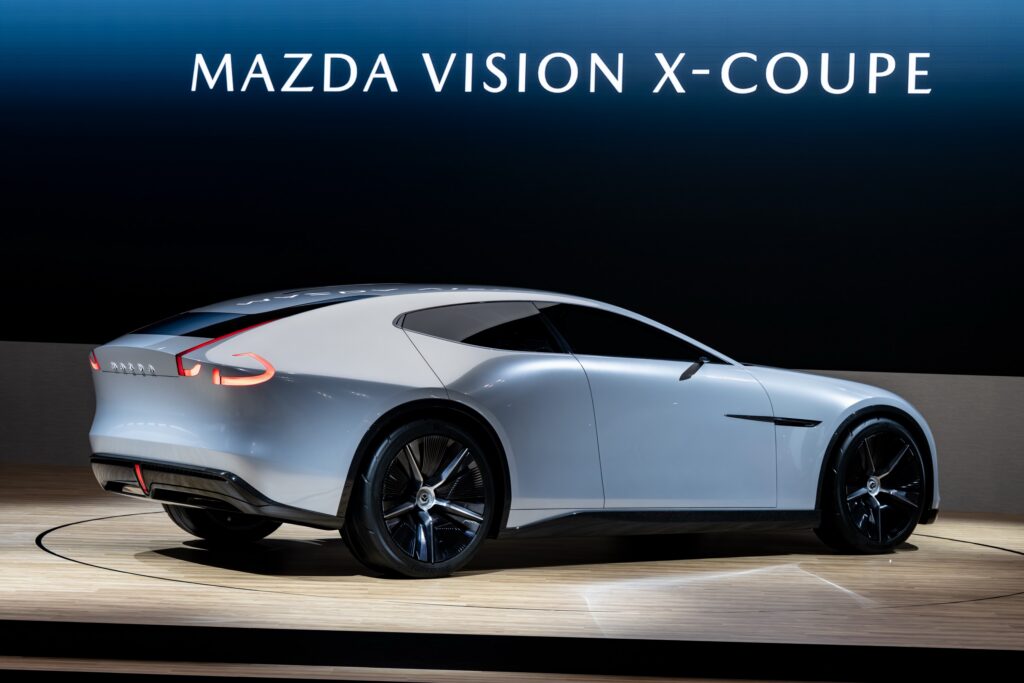
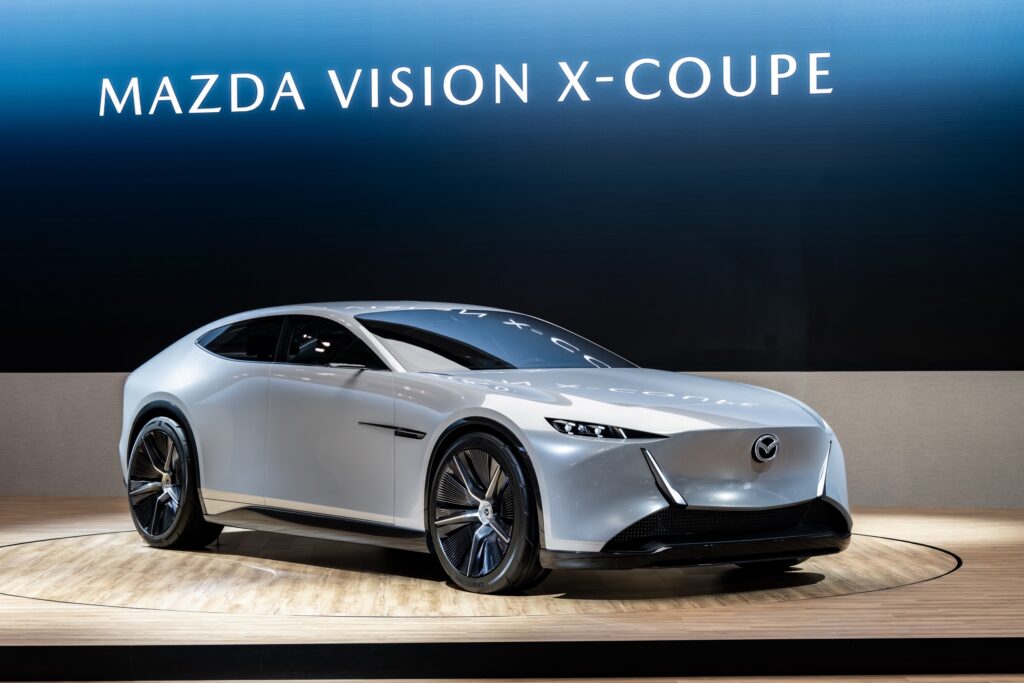
    The Japan Mobility Show kicks off in Tokyo this week, and Mazda is using the occasion to show off a couple of concepts it says embody a theme called “the joy of driving fuels a sustainable tomorrow.” One of these is the Vision X-Coupe, which Mazda says shows off the evolution of its KODO design language—something we first saw at the Tokyo show a decade ago .

    You can see a clear visual link between the renderings of the Vision X-Coupe and some of Mazda’s current models like the 3 hatchback or the CX-30 crossover, but translated through the long, low form factor of a four-door coupe. The design language is perhaps less interesting than some of the sustainability ideas that Mazda is exploring here, though.

    Mazda Vision X-Coupe concept
    There's definitely hints of the Mazda RX-Vision in this shape. Credit: Mazda
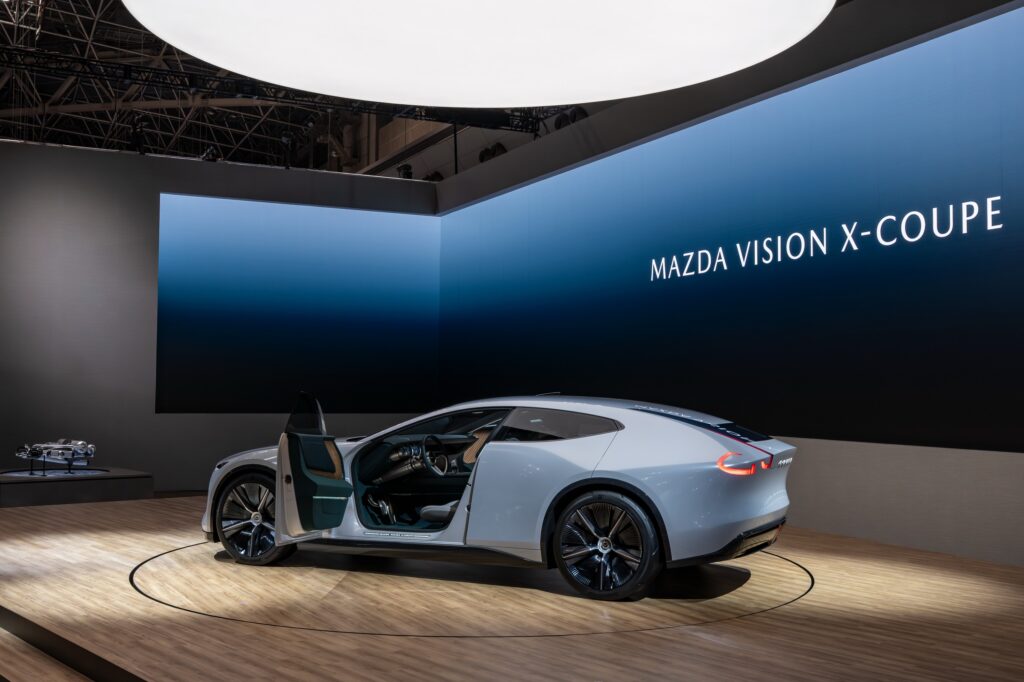
    Mazda Vision X-Coupe concept with the doors open
    It's a four-seat, four-door coupe. Credit: Mazda
    Mazda Vision X-Coupe concept
    Fun to drive AND sustainable? Sign us up. Credit: Mazda

    The powertrain is a 503 hp (375 kW) plug-in hybrid that uses a two-rotor turbocharged rotary engine as the internal combustion part of the equation. Mazda says it should have a total range of 500 miles (800 km), with a range of 100 miles (160 km) on battery power alone.

    Read full article

    Comments

    • chevron_right

      Westinghouse is claiming a nuclear deal would see $80B of new reactors

      news.movim.eu / ArsTechnica • 28 October

    On Tuesday, Westinghouse announced that it had reached an agreement with the Trump administration that would purportedly see $80 billion of new nuclear reactors built in the US. And the government indicated that it had finalized plans for a collaboration of GE Vernova and Hitachi to build additional reactors. Unfortunately, there are roughly zero details about the deal at the moment.

    The agreements were apparently negotiated during President Trump’s trip to Japan. An announcement of those agreements indicates that “Japan and various Japanese companies” would invest “up to” $332 billion for energy infrastructure. This specifically mentioned Westinghouse, GE Vernova, and Hitachi. This promises the construction of both large AP1000 reactors and small modular nuclear reactors. The announcement then goes on to indicate that many other companies would also get a slice of that “up to $332 billion,” many for basic grid infrastructure.

    So the total amount devoted to nuclear reactors is not specified in the announcement or anywhere else. As of the publication time, the Department of Energy has no information on the deal; Hitachi, GE Vernova, and the Hitachi/GE Vernova collaboration websites are also silent on it.

    Read full article

    Comments

    • chevron_right

      If things in America weren’t stupid enough, Texas is suing Tylenol maker

      news.movim.eu / ArsTechnica • 28 October

    While the underlying cause or causes of autism spectrum disorder remain elusive and appear likely to be a complex interplay of genetic and environmental factors, President Trump and his anti-vaccine health secretary Robert F. Kennedy Jr.—neither of whom have any scientific or medical background whatsoever—have decided to pin the blame on Tylenol, a common pain reliever and fever reducer that has no proven link to autism.

    And now, Texas Attorney General Ken Paxton is suing the maker of Tylenol , Kenvue and Johnson & Johnson, who previously sold Tylenol, claiming that they have been “deceptively marketing Tylenol” knowing that it “leads to a significantly increased risk of autism and other disorders.”

    To back that claim, Paxton relies on the “considerable body of evidence… recently highlighted by the Trump Administration.”

    Read full article

    Comments

    • chevron_right

      An autonomous car for consumers? Lucid says it’s happening.

      news.movim.eu / ArsTechnica • 28 October • 1 minute

    Is it possible to be a CEO in 2025 and not catch a case of AI fever? The latest company to catch this particular cold is Lucid, the Saudi-backed electric vehicle startup. Today, it announced a new collaboration with Nvidia to use the latter’s hardware and software, with the aim of creating an autonomous vehicle for consumers. Oh, and the AI will apparently design Lucid’s production lines.

    Formed by refugees from Tesla who saw a chance to improve on their past work, Lucid has already built the most efficient EV on sale in North America. But until recently, it also just had variants of the same Air sedan to offer consumers, before the Gravity SUV joined the range this year.

    The company will need to start selling tens of thousands of EVs a year before too long, especially if it’s ever to become profitable. And that will involve some smaller, cheaper models, starting with a midsize crossover sometime in 2027. A major goal for the first of those EVs is a starting price of less than $50,000 , so I hope they’re getting a good deal on the Nvidia GPUs that Lucid now says will enable a “true eyes-off, hands-off, and mind-off” autonomous driving system for consumer-owned vehicles.

    Read full article

    Comments

    • chevron_right

      Senators move to keep Big Tech’s creepy companion bots away from kids

      news.movim.eu / ArsTechnica • 28 October

    The US will weigh a ban on children’s access to companion bots, as two senators announced bipartisan legislation Tuesday that would criminalize making chatbots that encourage harms like suicidal ideation or engage kids in sexually explicit chats.

    At a press conference, Josh Hawley (R-Mo.) and Richard Blumenthal (D-Conn.) introduced the GUARD Act, joined by grieving parents holding up photos of their children lost after engaging with chatbots.

    If passed, the law would require chatbot makers to check IDs or use “any other commercially reasonable method” to accurately assess if a user is a minor who must be blocked. Companion bots would also have to repeatedly remind users of all ages that they aren’t real humans or trusted professionals.

    Read full article

    Comments

    • chevron_right

      Samsung makes ads on $3,499 smart fridges official with upcoming software update

      news.movim.eu / ArsTechnica • 28 October

    After kicking off an unpopular pilot test last month, Samsung made the practice of having its expensive smart fridges display ads official this week.

    The ads will be shown on Samsung’s 2024 Family Hub smart fridges. As of this writing, Samsung’s Family Hub fridges have MSRPs ranging from $1,899 to $3,499 . The ads will arrive through a software update that Samsung will start issuing this month and display on the fridge’s integrated 21.5- or 32-inch (depending on the model) screen. The ads will show when the fridges are idle and display what Samsung calls Cover Screens.

    As part of the Family Hub software update, we are piloting a new widget for select Cover Screens themes of Family Hub refrigerators. The widget will display useful day-to-day information such as news, calendar and weather forecasts, along with curated advertisements.

    Samsung also said that its fridges will only show contextualized ads, instead of personalized ads, which rely on collecting data on users.

    Read full article

    Comments

    • chevron_right

      Melissa strikes Jamaica, tied as most powerful Atlantic storm to come ashore

      news.movim.eu / ArsTechnica • 28 October

    Hurricane Melissa made landfall in southwestern Jamaica, near New Hope, on Tuesday at 1 pm ET with staggeringly powerful sustained winds of 185 mph.

    In the National Hurricane Center update noting the precise landfall time and location, specialist Larry Kelly characterized Melissa as an “extremely dangerous and life-threatening” hurricane. Melissa is bringing very heavy rainfall, damaging surge, and destructive winds to the small Caribbean island that is home to about 3 million people.

    The effects on the island are sure to be catastrophic and prolonged.

    Read full article

    Comments

    • chevron_right

      Python plan to boost software security foiled by Trump admin’s anti-DEI rules

      news.movim.eu / ArsTechnica • 28 October

    The Python Software Foundation has rejected a $1.5 million government grant because of anti-DEI requirements imposed by the Trump administration, the nonprofit said in a blog post yesterday. The grant would have been the largest in the organization’s history.

    Hoping to “address structural vulnerabilities in Python and PyPI,” the foundation submitted a grant proposal in January 2025 to the National Science Foundation’s Safety, Security, and Privacy of Open Source Ecosystems program . After a “multi-round proposal writing process” and a “months-long vetting process,” it appeared the foundation was close to obtaining a two-year grant worth $1.5 million.

    But what at first seemed like good news quickly turned sour due to rules against Diversity, Equity, and Inclusion programs, the foundation said:

    Read full article

    Comments